How to Report a Train Blocking a Road or Railroad Crossing
Reporting Trains Blocking Roads and Railroad Crossings
Freight trains occasionally stop while occupying railroad crossings, blocking roadways for extended periods of time. When this happens, drivers, businesses, and emergency services can experience significant delays.
In many cases, these incidents can be reported to help transportation agencies better understand how train traffic impacts local roads.
If you encounter a train blocking a road or railroad crossing for an extended period, there are ways to report the situation and provide useful information to transportation authorities.
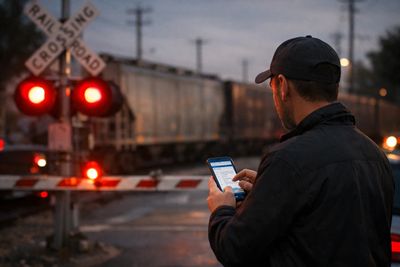
Why Trains Sometimes Stop on Crossings
Freight trains may stop while occupying a railroad crossing for several reasons.
Common causes include:
• train traffic congestion on the rail network
• switching operations in rail yards
• mechanical or operational delays
• waiting for clearance from dispatchers
• traffic ahead on the rail line
Because freight trains can be over a mile long, when a train stops while crossing a roadway it can block traffic for extended periods. Understanding when and where these delays occur is important for transportation planning and public safety.
How to Report a Train Blocking a Road
If a train is blocking a railroad crossing for an extended period of time, it may be possible to report the incident to transportation authorities.
Information that may be helpful when reporting a blocked crossing includes:
• the street name or crossing location
• the time the crossing became blocked
• how long the crossing has been blocked
• were emergency vehicles blocked
• did pedestrians attempt to climb through
Providing accurate information helps agencies track patterns of blocked crossings and understand how rail operations affect roadways.
Federal Railroad Administration Blocked Crossing Reporting
The Federal Railroad Administration (FRA) operates a national system that allows the public to report railroad crossings that are blocked by trains.
Reports submitted through this system are shared with the railroad companies and transportation agencies responsible for the rail line.
You can report a blocked crossing through the official FRA website here:
FRA Blocked Crossing Reporting System
https://www.fra.dot.gov/blockedcrossings/
The system allows drivers and communities to document incidents where trains block roadways for extended periods of time.
Why Reporting Blocked Crossings Is Important
When blocked crossings are reported consistently, transportation agencies can better understand where problems occur and how frequently crossings are affected.
This information may be used to:
• identify crossings with frequent delays
• evaluate traffic impacts on surrounding roads
• improve coordination between railroads and local agencies
• support transportation planning and safety improvements
Public reporting can help highlight locations where blocked crossings significantly impact communities.
Avoid Getting Stuck Behind Trains
While reporting blocked crossings can help improve long-term awareness, many drivers simply want to avoid getting stuck behind a train in the first place.
BlockedTrax provides real-time alerts when trains approach monitored railroad crossings so drivers can plan alternate routes and avoid delays.
The BlockedTrax system detects:
• trains at a crossing
• trains occupying crossings
• trains that stop while blocking crossings
• when crossings clear again
By providing real-time crossing alerts, BlockedTrax helps users avoid unexpected delays caused by trains blocking the road.
Railroad Crossing Data and Analytics
BlockedTrax also collects operational data about train activity at monitored crossings, including blockage duration, stop incidents, and time-of-day traffic impact.
This data can provide valuable insight into how rail traffic affects local transportation infrastructure.
Learn more about crossing data and reporting here:
Stay Informed About Train Activity
BlockedTrax helps drivers stay informed about railroad crossing activity so they can avoid delays and plan their routes more efficiently.
Explore current crossing coverage and learn more about the BlockedTrax system on the website.
Frequently Asked Questions
Please reach us at blockedtraxinfo@gmail.com if you cannot find an answer to your question.
Laws regarding how long trains can block crossings vary by state. In some locations trains may legally occupy crossings for extended periods depending on rail operations and federal regulations.
Blocked crossings can be reported through the Federal Railroad Administration's blocked crossing reporting system.
Freight trains may stop due to rail traffic congestion, switching operations, dispatch clearance, or operational delays.
BlockedTrax, LLC - Patent Pending
BlockedTrax provides real-time train alerts and railroad crossing status updates to help users avoid delays. By monitoring train movement at key crossings, BlockedTrax notifies users when trains arrive, stop, and clear so they can plan alternate routes and avoid unnecessary delays
Copyright © 2025 BlockedTrax, LLC - All Rights Reserved.
BlockedTrax technology is protected by one or more U.S. patent pending applications.
This website uses cookies.
We use cookies to analyze website traffic and optimize your website experience. By accepting our use of cookies, your data will be aggregated with all other user data.